

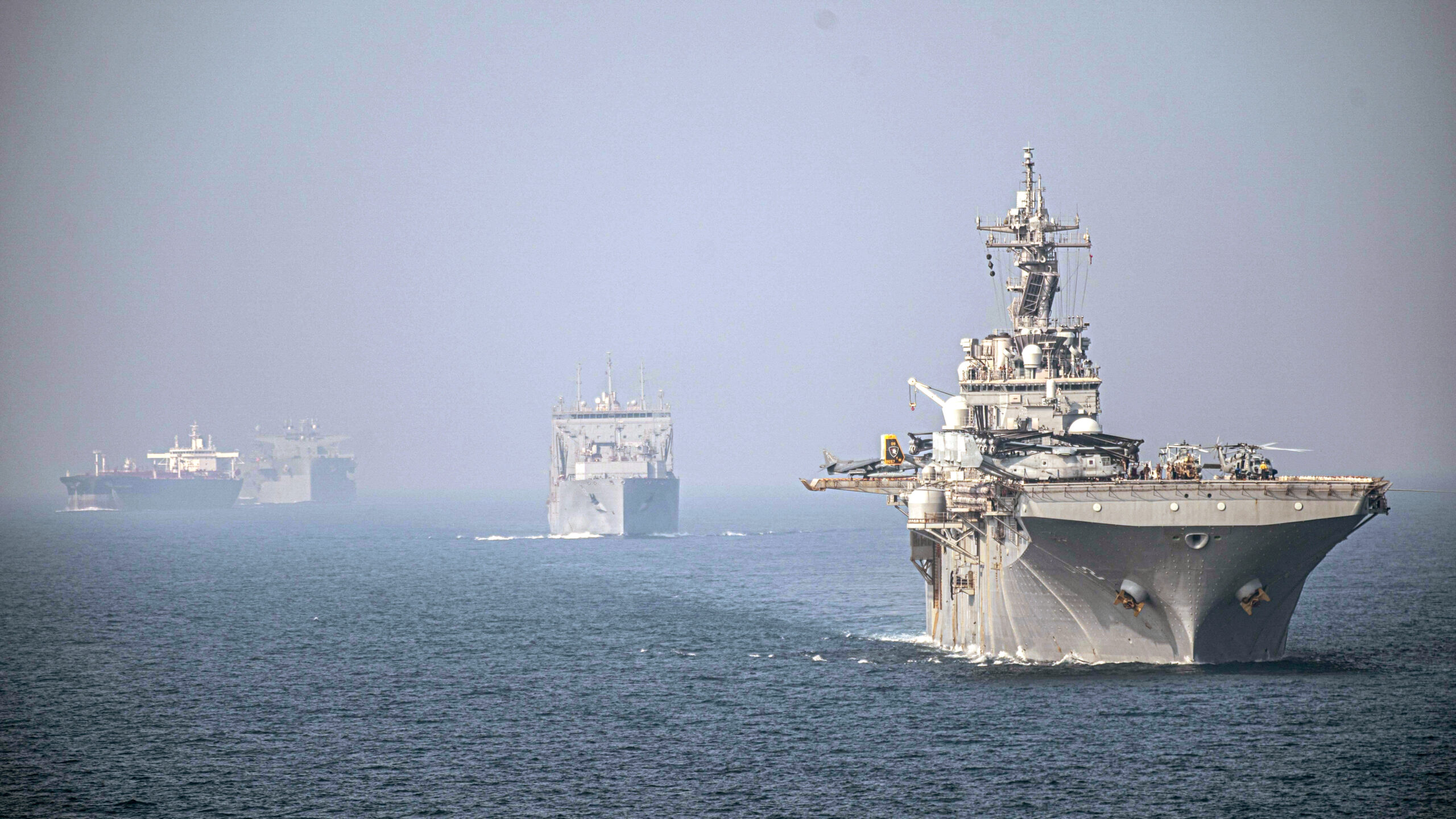
The ongoing war with Iran is the first major conflict the United States has initiated during a regime change at home. While American and Israeli forces have been conducting large-scale bombardment against Iran, the government prosecuting that war has simultaneously been dismantling the institutional architecture of the American state: cutting out the policy process, subordinating the intelligence community, contracting the national security apparatus to a circle of loyalists, and defying the War Powers Resolution without consequence. What is underway in Washington is a revolution from within that requires foreign wars for consolidation of power at home. Previous American wars, however disastrous, were waged by a state with recognizable continuity. This one is being waged by an extractive regime that is turning the state into a pariah. That is the central fact about this conflict, which is being lost in the torrent of AI-generated slop that passes for policy analysis across Western capitals, as death and destruction mount.
To understand why Iran became a target for military action rather than some other adversary, one has to understand how Trump’s foreign policy has operated since he returned to office. The pattern is consistent enough to have become a kind of doctrine. The Saudis came with $600 billion in investment pledges. Qatar donated a $400 million Boeing 747, which the president said it would be stupid to turn down, and which the Air Force was duly tasked to refit at classified expense. The UAE, four days before Trump’s inauguration, quietly bought a $500 million stake in the Trump family’s cryptocurrency venture World Liberty Financial; months later a state-backed Abu Dhabi firm routed $2 billion through the same company’s stablecoin. In each case the structure was identical: pay tribute, give Trump something he can exhibit as a win, and attain, for a time, a gold-plated stamp of approval from the Oval Office. The Islamic Republic was never positioned to do this. It had no sovereign wealth fund to redirect, no investment architecture to mobilize, no migration crisis solvable by phone call, and worse yet, it had signed a landmark nuclear deal with Barack Obama. Where every other government in the region found a price, Iran could not name one.
The nuclear question is real, though it has been managed in a way that makes the distinction between genuine concern and convenient justification hard to maintain. Consider the sequence. In June 2025, after the twelve-day war, Trump delivered a four-minute address announcing that Iran’s nuclear facilities had been ‘completely and totally obliterated’. Not degraded. Not set back. But ‘obliterated’. He brokered a ceasefire, announced it in capital letters on Truth Social, and accepted the full historical credit from himself. A month later the Pentagon estimated the program had been delayed by one to two years. The head of the IAEA said Iran could resume enrichment within months. No accounting was offered for the distance between ‘obliteration’ and a two-year delay. No accounting was expected. The gap simply closed over, until the ‘obliterated’ program surfaced nine months later as the justification for a second war, larger than the first.
In the interval, Trump had told Iranian protesters on Truth Social to take over their institutions, promised them that ‘help is on its way’, and watched as somewhere between seven thousand and thirty-six thousand of them were killed under an internet blackout imposed to prevent an accurate count. He then accepted the regime’s assurances, reversed course, and moved on. The large-scale bombardment that followed fell on a people who had already paid once and were now being asked to pay again, by a president who had declared the nuclear threat finished, promised the Iranian people his protection, and concluded that a larger war than any previously attempted was nonetheless required. The nuclear facts had not changed materially across any of these positions.
From the start, Netanyahu has read Trump more accurately than most Western governments have managed to do. Trump’s commitments are performative rather than ideological, and a useful alliance must supply occasion for the large gesture rather than strategic coherence. A war against Iran was perfectly suited to this purpose. Iran has been demonized in American political culture more thoroughly and for longer than perhaps any other state, to the point where its villainy requires no argument, only invocation. The war could be packaged as the act of decisive courage that no previous president had dared, and Netanyahu packaged it accordingly. His own reasons for wanting it are well documented and need not detain us: the charges of fraud, breach of trust, and bribery; the governing coalition sustained since October 2023 through an unbroken chain of emergency conditions, through Gaza, the pummeling of Lebanon, the twelve-day war. Netanyahu also understood that the window for this war was not determined by Iran’s nuclear timeline but by the American political moment: a president in the early phase of regime consolidation, hungry for the kind of historic self-aggrandizement that a war against the most demonized adversary in the American foreign policy canon could uniquely supply, and unlikely to remain in that particular state of appetite indefinitely.
Trump’s own investment in the war is of a different and more consequential kind. The standard explanations – that he is rewarding his evangelical base, completing the Abraham Accords, or executing Netanyahu’s brief – have something to them, yet they ignore the plain fact that what war reliably generates for Trump is noise: a rolling procession of maximalist threats, declarations of historic achievement, and announcements delivered in the register of a sporting event. The administration has conflated news-cycle dominance with the conduct of foreign policy so thoroughly that one is no longer certain its senior figures know the difference. Trump himself serves simultaneously as promoter and champion. The audience he is primarily addressing is not in Tehran, but in the professional wrestling arena he has made out of the mainstream media.
The response of Trump’s base has been the most clarifying development of the entire episode. This was the constituency built substantially on the promise of an end to foreign military adventure, and it includes people for whom the Iraq war was a personal injury rather than a foreign policy error: veterans, the families of the dead, communities that had paid with lives and money for a war whose architects paid nothing. Trump’s promise to end the forever wars was received by these voters as something rare in American politics: the acknowledgment of a specific wrong done to specific people. That promise has now been abandoned, but is already being smoothed by a consent operation of some sophistication. Opposition to the war is attributed to radical Democrats whose sympathy for Iran is cast as continuous with their sympathy for open borders and the erosion of American values. The enemy is conjured primarily as ‘radical Islamist terrorists’, drawing on anxieties cultivated in the right-wing press for the better part of twenty years, the nuclear dimension receding behind the religious one. Trump’s performative anti-interventionism, it has become abundantly clear, was yet another extractive hustle to fortify his brand of identity politics ahead of the last election.
The war against Iran is the extension by other means of the process of regime change underway in Washington. The interregnum requires enemies, multiple emergencies, and the continuous production of a political atmosphere in which normal institutional constraints appear not merely inconvenient but treasonous. A war with the most comprehensively demonized adversary in the American political imagination supplies all of these at once.
What this interregnum does not fully reckon with, however, is that Iran, whatever its incapacity to meet Trump’s extractive demands, is rather well practiced in the imperatives of its own survival. Over the past 47 years, the Islamic Republic has developed a political culture and a security apparatus oriented entirely around the management of existential threats. Trump has started a war of regime consolidation against a state that has been in the business of regime survival for longer than most of his advisers have been alive. In that asymmetry lies the war’s most consequential irony. The president who treats foreign policy as an extraction racket, and who measures success by tribute paid and humiliation delivered, has met an adversary with nothing left to offer and no tradition of offering it. History’s ledger on wars begun by states in transition is not encouraging. The energy that goes into remaking institutions at home tends to be precisely the energy that a prolonged foreign conflict will eventually demand.