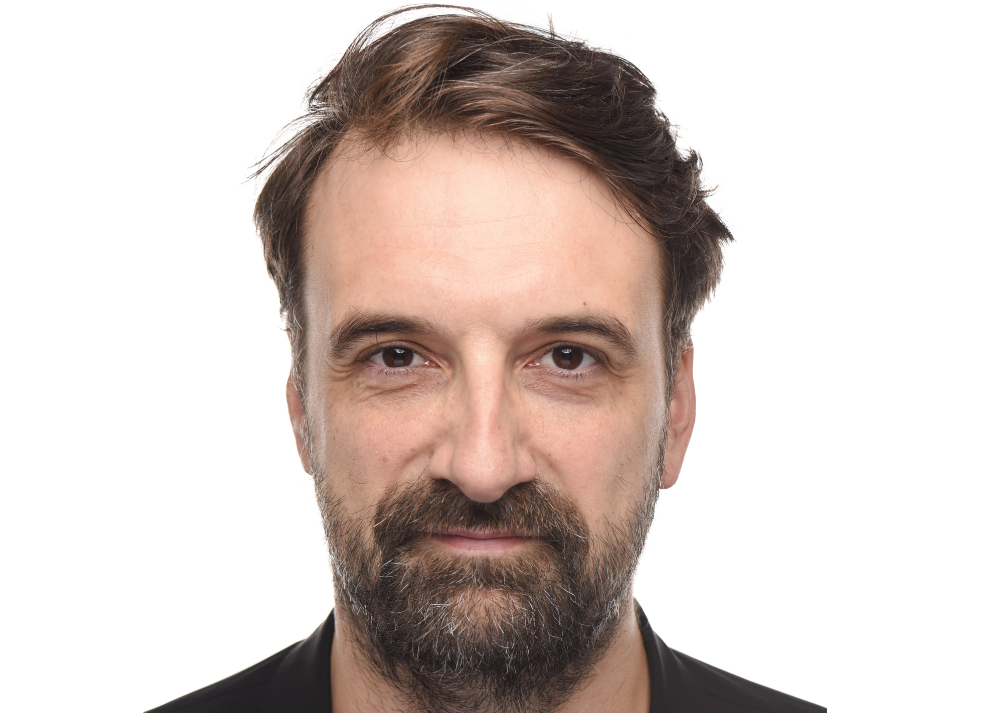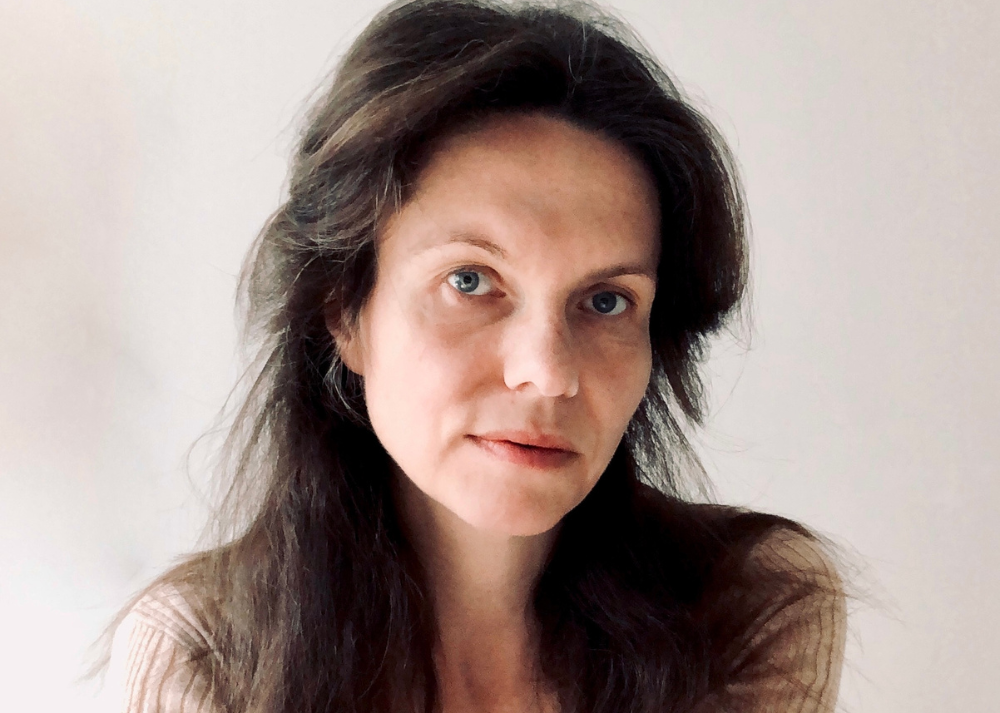

Our grandparents fought on opposing sides in the Second World War. We grew up and have lived in Germany, France, Russia, and the United States. We have experienced the freedoms earlier generations fought for—freedoms we have probably taken for granted too often. In our work as academics, we have learned about the risks facing democracies worldwide and European democracy in particular. Akin to the vision of Democracy Seminar, we believe that scholars, while they should be cautious about becoming activists for any particular political cause, nevertheless have a responsibility to contribute to the creation and protection of respectful democratic spaces. The European Democracy Institute will serve as such a space.
The past decade has revealed a transformation in global politics that few liberal democracies were prepared for. Power is shifting away from open societies toward states that combine economic modernization with authoritarian consolidation. Democratic systems, meanwhile, are strained from within: political polarization, economic insecurity, and fragmented public spheres have weakened trust not only in institutions but in the very idea of collective self-government.
Europe feels these pressures acutely. Externally, the geopolitical environment has grown more volatile than at any moment since the end of the Cold War. Internally, European societies confront democratic fatigue, the rise of ethnonationalism, and deep uncertainty about the future of political community. At the same time, global challenges—from climate change and technological disruption to economic dislocation and new forms of geopolitical dependency—demand more democratic capacity, not less. Europe thus faces a paradox: it must strengthen its democracies precisely when the conditions for democracy are deteriorating, and it must do so under historically difficult circumstances—across different languages, national cultures, and state structures that were never designed to support such an endeavor. Yet within this challenge lies a source of possibility. Because Europe has no ready-made precedent for shared political life, the work ahead requires intellectual invention and democratic imagination.
What makes the European project remarkable is not merely its institutional architecture, but the historical reversal that made it possible. Few other regions in the modern world have attempted to transform a landscape marked by centuries of rivalry, arch-enmity, and war into a political community built on cooperation and shared governance. The continent that produced two catastrophic world wars also produced the most ambitious peace project in modern history. This effort was not naïve: it emerged from the recognition that Europe’s multiplicity of languages, cultures, and national traditions had too often been mobilized for violence, and that only by creating structures of mutual interdependence could that destructive cycle be broken.
We should not forget that, despite all its historical conflicts, Europe still shares an interwoven history, geographical proximity, and rich transnational cultural awareness. Its literature is transnational; so, too, were the aristocratic elites of the Holy Roman Empire. After World War II, reconciliation camps, university exchanges, Eurorail, the Erasmus university exchange program and numerous other initiatives animated a rich European life that binds together civil societies as a democratic foundation for lasting peace. There is clearly an idea of what it means to be European. It cannot be reduced to ethnonational homogeneity—indeed, exactly the opposite is the case: the idea of Europe thrives on pluralism. The European Union translated what had previously been largely theoretical ideals—ideas articulated by Émeric Crucé, Victor Hugo, William Penn, Jean-Jacques Rousseau, Abbé de Saint-Pierre, Konrad von Schmidt-Phiseldeck, and others—into institutional structures. The European Union, however imperfect, remains a testament to the idea that historical antagonists can not only coexist but gradually knit their futures together.
The density of Europe’s cultural spaces—its cities, intellectual traditions, and lived experiences—makes it possible to draw on a deep reservoir of memory, creativity, and critique. The challenge is to turn that inheritance into a resource for democratic renewal rather than a source of paralysis or division. This trajectory is inseparable from another, more difficult dimension of Europe’s past. The continent’s global presence was long shaped by colonial expansion, exploitation, and domination—histories that continue to inform political debates both within and beyond Europe. Unlike many regions, Europe has made the acknowledgment of historical guilt a constitutive part of its political culture, even if unevenly and incompletely. Yet this acknowledgment—an ongoing process that requires further deepening—has produced a distinctive self-awareness: a sense that Europe must learn from its past not by retreating from political responsibility, but by reimagining what collective self-government can mean in a world marked by interconnectedness and asymmetry. Even if often justified, postcolonial critique is sometimes deployed in ways that cast Europe primarily as a historical culprit, obscuring its past and present democratic aspirations.
This external skepticism reflects a broader global ambivalence toward Europe’s role. It also obscures a deeper geopolitical truth: after 1945, even one of its closest allies, the United States of America, has never been interested in a truly united and strategically autonomous Europe. From the beginnings of the postwar order, American strategy favored a cooperative but divided Europe—open markets without an independent geopolitical center of gravity. At a moment when the United States is struggling with its internal divisions and turning away from international institutions and norms, a Europe committed to liberal democracy is uniquely positioned to face its new responsibilities.
These layers of skepticism might discourage political ambition, but they also clarify the stakes. In a world shaped by authoritarian actors, competition over critical resources and infrastructures, and the fragility of traditional alliances, Europe has fewer options than in previous decades. To avoid having its future shaped by others, Europe must develop new capacities to act collectively—and this also means becoming more democratic. Integration cannot be based on military and commercial considerations alone. Moreover, unity does not require uniformity. A multinational democratic Europe can be federally organized without overcentralization, and cooperative without erasing national spheres of solidarity. Such a structure, if equipped with credible democratic mechanisms, would counteract both nationalist fragmentation and the concentration of political power, allowing nations to retain democratic depth while acting together where collective capacity is indispensable.
The European Democracy Institute emerges from this historical moment and is shaped by its demands. Based in Berlin—a city marked by both democratic breakthroughs and catastrophic failures—it approaches democracy as a complex system that cannot be reduced to institutional design alone. Democracy requires functioning courts and parliaments, but also stable economies, resilient publics, geopolitical security, and a civic culture capable of imagining a shared future and thinking through complex political questions. The Institute’s research explores how these dimensions interact, how they break down, and how they might be renewed.
Its international Working Groups take up precisely those questions Europe must confront if it is to remain democratic in a transformed world. One group examines how globalization—long assumed to dissolve states and now itself under new geopolitical and geoeconomic pressures—has instead generated new forms of political interdependence, and how democratic legitimacy might be created at scales exceeding the national state. Another brings teachers, students, and scholars together around texts, classical and contemporary, Western and non-Western, engaging with the ideas they present to rethink democracy’s possibilities and limitations. A third studies Europe’s evolving relationship with Central Asia, a region whose shifting alignments reveal how global power is being reorganized and how questions of gender, law, and regional cooperation intersect with democratic development. A fourth investigates the governance of climate change and other public goods, probing the institutional capacities and distributive questions that will shape whether societies respond democratically or drift toward technocratic or authoritarian solutions.
The Institute’s educational programs extend this work beyond academia. The Democracy School brings younger generations into conversation about the principles and practices of democracy at a time when political horizons often feel diminished, through collaborative initiatives that combine academic learning with experiential engagement. These include EU and NATO simulations, transatlantic journalism projects with Princeton University, and arts-based programs such as Teen World of Arts that connect Bard College Berlin students with schools, universities, and civic organizations. The European Democracy Institute also collaborates with Europapodcast as a platform for reflecting on European democracy with people from all walks of life and for presenting scholarly research to a broader public. The Hannah Arendt Lectures—drawing on Berlin’s intellectual vitality—open democratic debate to wider audiences, while the annual Fritz Stern Award for Democratic Engagement, in cooperation with the Berlin-Brandenburg Academy of Sciences and Humanities, honors those whose professional lives exemplify democratic courage.
In partnership with the Transregional Center for Democratic Studies at The New School for Social Research, the European Democracy Institute cohosts the Democracy Seminar as a platform where scholars and writers from across the democratic spectrum come together to reflect on the political challenges of our time and to engage audiences beyond academia. We are extremely grateful to Valérie Daniel, Jeffrey Goldfarb, Siobhan Kattago, Juliet Meyers, Elisabeta Pop, Michael Weinman for all the work they have put into relaunching Democracy Seminar. At a time when global spaces for dialogue and exchange are under strain, this initiative is immensely important in that it builds an international network of scholars and public intellectuals representing diverse perspectives and experiences from the democratic left, right, and center. It promotes critical reflection on urgent issues and encourages the sharing of ideas and solutions, enabling democrats around the world to learn from one another and to imagine new forms of collective thought and action.
Together, these efforts are guided by a shared ambition that extends beyond individual programs or initiatives, serving a single purpose: to contribute to the intellectual and civic infrastructure we need to navigate this historical juncture. A continent attempting to build democracy across profound linguistic, cultural, and institutional diversity—without relying on the old tools of homogenization—is undertaking something genuinely new. If it succeeds, Europe may pioneer a model of democratic governance suited to a world in which major problems exceed national borders. The European Democracy Institute is created in recognition of both the difficulty and the promise of this moment. It is premised on the belief that Europe can meet the demands of the present—but only if it understands itself, learns from others, and commits to renewing the practices of democratic life. Its work begins from the conviction that democracy’s future in Europe is not foreclosed, and that within the continent’s complexity lies not only a challenge but an opportunity to imagine political forms equal to the world that is coming.