
A collaboration with The New School & the European Democracy Institute
 
Category: <span>Dispatches</span>

Dispatches

The Important Evidence from the January 6 Hearings Must Be Better Communicated If Constitutional Democracy Is to Be Saved

Written by:

The House Select Committee to Investigate the January 6 Attack on the United States Capitol has now completed its second two-hour hearing, with its third hearing scheduled for this afternoon. The Committee has clearly done much important work, and its presentation of its findings is off to a good start. At the same time, unless the Committee finds ways to communicate more broadly and deeply, so that its …
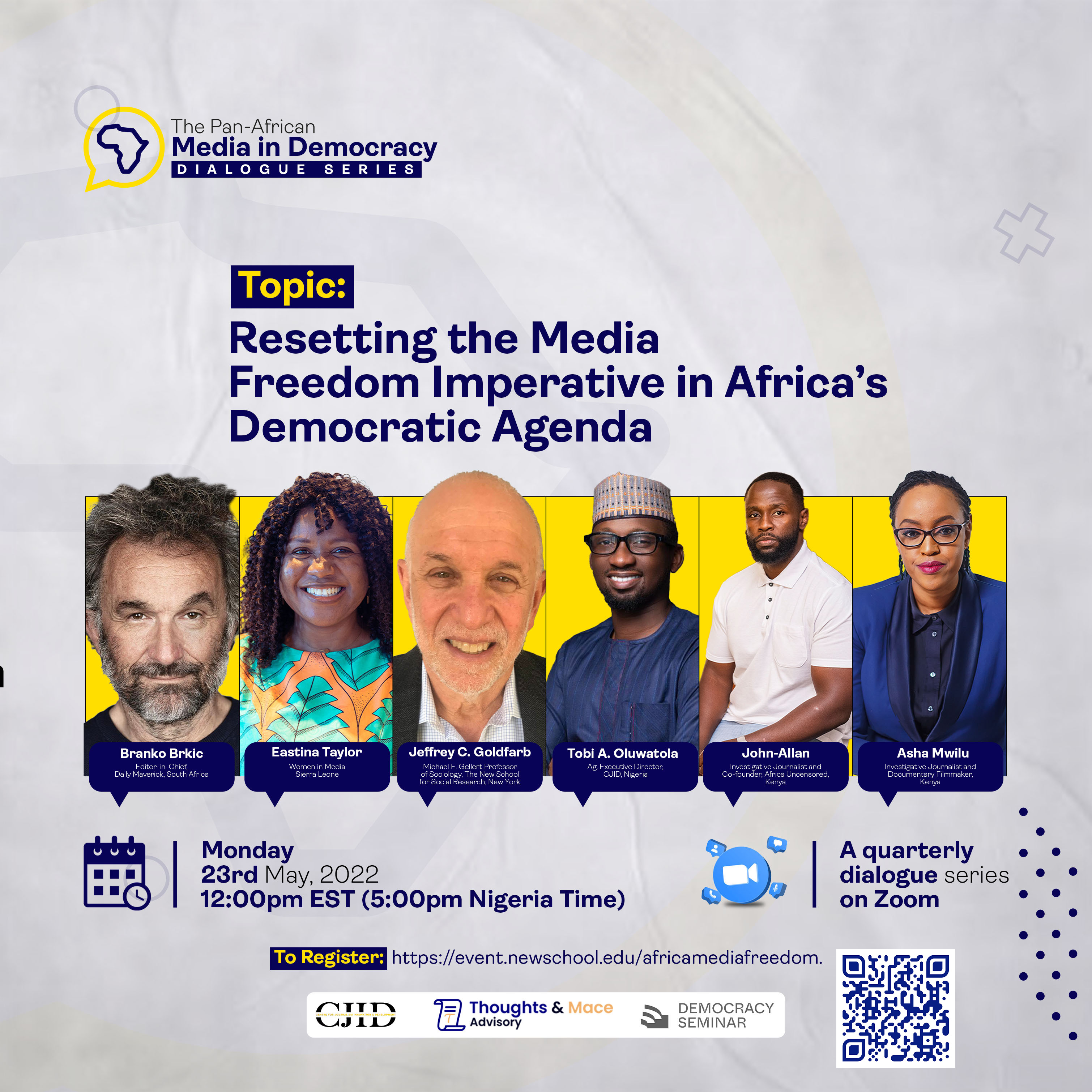
Resetting the Media Freedom Imperative in Africa’s Democratic Agenda

Written by:

While some countries around the world still continue to exert draconian laws in a bid to suppress free speech, Sierra Leone is making some gains towards a press that is more stable and viable.  In 2020, the government of Sierra Leone repealed the Criminal and Seditious Libel law and this has helped to make tremendous strides towards press freedom. We have no journalists in jail in relation to …

Freedom of Expression, Theocracy, and a Free Media in West Africa’s Democracy

Written by:

At the time of writing this, Sokoto State in Northern Nigeria is burning following the mob lynching of a 22 year old student, Deborah Yakubu, over a voice note she posted on a WhatsApp group asking her classmates to stop posting religious messages on the group intended for school work, and ostensibly insulting the Prophet in the process. Deborah was dragged out of the protection of the school’s …

May 18: In The Memory for the Deported Crimean Tatars

Written by:

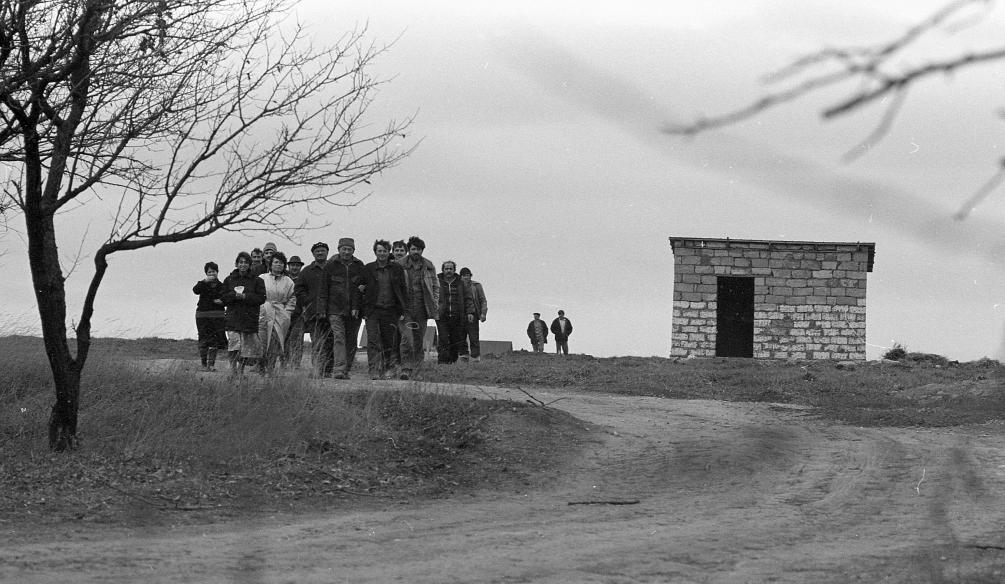
There is no Crimean Tatar for whom the day of May 18th does not evoke strong emotions. This year, May 18th commemorates seventy-eight years of their mass deportation; almost 200,000 Crimean Tatars were torn from their beds in the middle of the night, and forced into cattle wagons.¹ Accused of collaboration with the Nazis by Joseph Stalin, they were declared the traitors and enemies—despite many of the male Tatars …

The Empire Strikes Back

Written by:

The imperial formations and colonial relations framing Russia’s war on Ukraine Framing the War  Two months have passed since the beginning of Russia’s second recent invasion of Ukraine. Predictions of the outcome of the conflict have shifted from certainty of a full Russian occupation to a stalemate resulting in protracted war. Uncertainty over probable resolutions mirror myriad causal accounts explaining Russia’s aggressive behavior. Regrettably, almost all such interpretations …

The Crisis of Democracy as De-democratization

Written by:

Looking back at transitions to democracy and the quality of democracy thirty years later There is a global crisis of democracy in play. It raises the possibility of a potential reversal of the third wave of democratization and puts at risk even consolidated regimes (Mounk, 2019; Levitsky and Ziblatt 2018; Przeworski, 2019; Rosanvallon, 2020). Steven Levitsky, Daniel Ziblatt and Adam Przeworski, among many other authors, set up the …

The War in Ukraine and the Renewal of Democracy in Europe

Written by:

“Historicity, infinite perfectibility, the original link to a promise make all democracy a thing to come.” Jacques Derrida The war in Ukraine, as well as its prelude, the 2014 Revolution of Dignity, put the project of European integration at the center. This is surprising to many. In Brussels, Eurocrats in 2014 rubbed their eyes in amazement that someone was willing to die for an association agreement with the EU; …

Fabricating Invisibility on Media and in the Courts

Written by:

A dilemma of democratic life Images v. Visibility  The study of visibility is not the study of images, even though it includes it, and even though Images mediate and objectify visibility.  Images are objects. They are addressed by semantics, syntactics, semiotics (Eisenstein, Barthes, Panofsky, Peirce).  Visibility is part of a theory of action. Visibility can be seen as the result of the action of making visible (an action …

“A Quarrel in a Faraway Country. . .”

Written by:

Some thoughts on the end of the end of history “A Quarrel in a Faraway Country” In March 2014, in an address presented in the Grand Kremlin Palace, Vladimir Putin celebrated the annexation of Crimea. The peninsula—he claimed—had been “plundered” from Russia, part of the “outrageous historical injustice” that accompanied the collapse of the Soviet Union. Had a talented director made this into a film, those watching would …

Is Liberal Democracy Aready History?

Written by:

There’s a dark joke that the Polish dissident thinker Adam Michnik likes to tell:  If in 1987 God had asked the Poles what their three most fervent wishes were, they would have replied: First, we want to live in a country with no political prisoners. Second, we want a country without censorship and foreign armies. And third, we would like the Soviet Union to fall apart. And the …