Between Past and Future
I have written many posts describing the founding and the progress of the Democracy Seminar. This will likely be my last, as I pass the torch to new editorial leadership, and as the Democracy Seminar is now supported by the new European Democracy Institute in Berlin, along with the New School for Social Research in New York.
My past posts provide a pretty good summary of the seminar’s activities and key principles over the years.
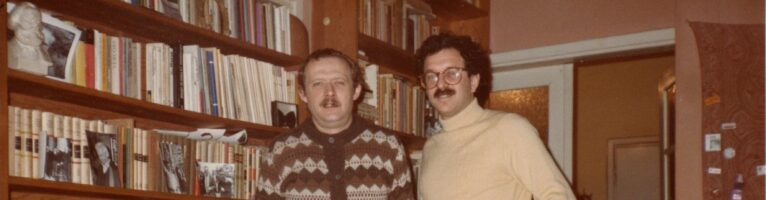
In relaunching the seminar in 2018, responding to the global ascendence of authoritarianism, I described the original seminar, founded in 1985 at the suggestion of Adam Michnik, as a semi-clandestine activity conducted between democratic activists on both sides of the old “iron curtain.” I proceeded to explain how the then recent developments of global authoritarian ascendence, led by Trump’s regime, suggested the need to revive our deliberations, Democracy Seminar, Then and Now.
I followed up with an update on our planned activities in 2019, explaining how they are linked to the problems of our times, while they sustain the original Democracy Seminar intellectual project. This is demonstrated in my report on our first in-person global conference held later that year. Two further posts charted the developments during the height of the Covid Pandemic. A report on our first Zoom conference, “We Are All in the Same Boat: A Democracy Seminar Update, followed by an additional update in 2021, entitled “A World Wide Committee of Democratic Correspondents.”
As I have been posting on our progress, we have published and discussed many contributions from our “correspondents” from around the world. Among others: in Brazil, Leonardo Avitzer has analyzed the challenges of democratization and de-democratization in Latin America, as Jacek Kucharczyk analyzed the same challenges in Poland and Jeffrey C. Isaac, along with many other colleagues, have critically analyzed Donald Trump’s step by step dismantling of the liberal democracy of the United States. I, further, reported on my work with students and colleagues at The American University of Afghanistan.
In addition to such publications, the seminar participants have been meeting monthly to compare notes and analyses, discussing important similarities and differences in the global struggle as it is manifested in our local circumstances. Although there is broad principled agreement among our contributors and readers about the desirability of democracy, there are often detailed disagreements, significantly in our deliberations about social democracy and liberal democracy, and about the Palestinian-Israeli conflict, see e.g., Ayat Odeh’s “The History of Struggle in Palestine and Its Current Relevance” and Shaul Magid’s Democracy in Israel/Palestine Today. It is notable that in these deliberations, strong normative commitments are presented, but that there is also an openness to consider those with whom our correspondents disagree. I fully anticipate that we will continue moving down this path into the future.
I would like to share how the seminar has been for me a kind of intellectual workshop, how my engagement in the Democracy Seminar has shaped and continues to shape my own intellectual journey, how it has informed my research and writing over the past four decades, and how I imagine it will in days to come as I anticipate my role in the future.
Each of my books published since the founding of the Democracy Seminar emerged out of deliberations of the seminar. In Beyond Glasnost: The Post Totalitarian Mind (1989) and The Cynical Society: The Culture of Politics and the Politics of Culture in American Life (1992), I analyzed how dogmatic belief yielded a regime in the Soviet bloc that was legitimized through disbelief, while cynicism threatened democratic practice in the U.S., but hadn’t yet overwhelmed it. The Democracy Seminar, our “worldwide committee of democratic correspondence,” was my home base for these studies. I could not have possibly completed them if I didn’t feel truly at home on both sides of the old iron curtain. This is clearly revealed in my political travelogue After the Fall: The Pursuit of Democracy in Central Europe (1992), which was based on a trip I made around the old Soviet bloc to assess the struggles of my colleagues in that part of the world.
What I saw and heard as I met my Democracy Seminar colleagues was the grounds for my next major book project, Civility and Subversion: The intellectual in Democratic Society (1996). There was much technical discussion back then about the transition from dictatorship to democracy, and much celebration about “the end of history.” These discussions suggested that the time for critical intellectuals was over, that the time for critical intellectual deliberations about the promise and shortcomings of actually existing democracy had passed. The experiences I shared with my correspondents told me that this wasn’t so, and I explored the ways we intellectuals contribute to democratic life, as well as the ways we undermine it. This also informed my understanding of political culture as a creative ground for action and not as a pre-determined destiny, as I analyzed this in my book Reinventing Political Culture (2011).
I learned from my colleagues that culture can be a field of innovation (for better or for worse) in the political sphere, as it is in the sphere of the arts and sciences. Intellectuals as community members, who are different because of their experience in reading and socializing with people from other times and other places, e.g., as members of circles such as the Democracy Seminar, can contribute to democracy, can foster a democratic culture, by helping their compatriots to subvert common sense, revealing unexamined problems the community needs to face, and they can foster democratic culture, when they civilize differences among people who disagree so that they can talk and come to an understanding of each other.
The Democracy Seminar is an enterprise that fosters such intellectual engagement. After the publication of Reinventing Political Culture, I decided to turn away from book publishing, and apply the lessons I learned in my studies and through my participation in the Democracy Seminar, to focus on supporting a critical intellectual life online. I was convinced back then what is obvious now, but not so much so back then: that intellectual and public life was moving online, that the possibility of opposing very negative developments in politics and online social life necessarily requires online action. This was a key argument in my book The Politics of Small Things (2006). It has informed much of my intellectual engagements of the last twenty years, especially my commitment to the Democracy Seminar, as the Democracy Seminar exemplifies the power of the politics of small things that I analyze in the book.I just published a new one, Gray is Beautiful: Confronting the Retreat of Democracy from the Radical Center (2026). In another post, I will explain how I understand the book as a contribution to The Democracy Seminar. Key points: opposing the rise of the new authoritarian threat, which I understand as being neo-totalitarian, requires not only direct and forceful political resistance, but also a long cultural march informed by an appreciation of the power of the politics of small things, the specific democratic roles intellectual can play, and the need to disrupt the relationship between dogmatic true belief and cynicism. I anticipate that the themes of Gray is Beautiful and their implications will inform my contributions to the Democracy Seminar in the coming months and years.