


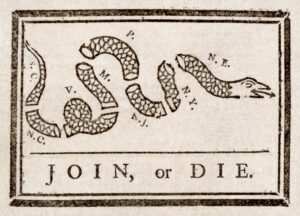
Exceptionalism has been a recurring feature of U.S. political culture since the founding. The exceptionalist myth of God’s chosen “city on a hill” (formulated by the Puritan John Winthrop, who drew on the Sermon on the Mount) has been fundamental to U.S. intellectual history since the settlement period in the 17th century; and the idea of the polity’s exceptionality today extends to a variety of features, all of which have been portrayed as exceptional both in kind and normative quality: Historical and cultural phenomena such as the “discovery” and settlement of the continental expanse, a harmonic “melting pot” culture, a unique entrepreneurial spirit, but also institutional features such as the presidency, checks and balances, and an ingenious U.S. federalism. With the 250th anniversary of the Declaration of Independence, the revolutionary charge of this political exceptionalism becomes particularly palpable: Time and again, the U.S. political order is portrayed as the embodiment of liberation from a tyrannical king and an oppressive empire. The norm of liberty towers over all exceptionalist attributions: The “land of the free” is assumed to have risen from a liberating revolution against the imperial enemies of this very liberty, and to rest on institutions that foster the liberty of the individual (and his or her life, liberty, and pursuit of happiness). To some, the Constitution still embodies this spirit. Its federal features in particular have been assumed from the founding onwards to ensure a fair and dynamic diffusion of power, and with it a firm protection against empire and tyranny, be it internal and external. Alexis de Tocqueville famously insisted on the innovative and liberty-ensuring quality of U.S. federalism for civic life.
But has the U.S. system ever come close to living up to these glowing self-attributions and expectations? This question concerns the constitution as a whole but federalism and its alleged role in preventing despotism in particular. Globally, different experiments in federalization from Germany to the European Union have referred to the U.S. example – institutionally as well as rhetorically -, even though U.S. federalism has been known for its ever-conflictual nature and especially for its – to put it mildly – anti-egalitarian potential (as formulated by W. Riker). Is U.S. really federalism deserving of perennial praise and emulation? This question contains a historical dimension: Have federalism’s anti-egalitarian, norm-violating tendencies been “built into” the American project from the very beginning, or do they “only” represent later deviations from the original path, which are not inherent to the overall design? If the latter is the case, U.S. style federalism may very well be salvageable. Indeed, political observers continue to believe that the constitution overall is not inherently flawed but contains a promise that could still be fulfilled. “The arc of the moral universe is long, but it bends toward justice” – this image from Martin Luther King, Jr., taken up by Barack Obama, among others, implies that the founding of the United States carries within it a normative substance that must be fully realized against all odds. Inscribed in this hope is the idea of the nation’s liberal, egalitarian core. As King writes in his speech “Remaining Awake Through a Great Revolution” (1963): “We will win our freedom because both the sacred heritage of our nation and the eternal will of God are embodied in our echoing demands.” Thinking of the nation’s beginning as a positive “heritage”, a good beginning, makes it possible to see the constitution as a sound starting point of the “arc of justice”. If, however, the constitution has been flawed since the founding and has functioned as an opening for anti-liberalism and anti-egalitarianism and for despotic or imperial practices all along this should cast doubt on the world-wide, including the European, influence of the U.S. model in general, and federalism specifically.
What can the history of political thought contribute to solving this puzzle of the anti-imperial character of the constitution more generally – a consistent refusal against hierarchical rule and despotism – and federalism more specifically? Is federalism, in its diffusion of power, a waterproof protection against imperialism, not least by cultivating a spirit of civic participation? A very traditional response to this question, grounded in the classical early-to-mid 20th century history of ideas, would cite the freedom-loving proclamations of the revolutionaries and emphasize that anti-imperial love of liberty was a central hallmark of the founding phase, and one of the reasons for the founders to embrace federalism. A more careful analysis of the history of ideas, however, has contextualized these declarations and concluded that the U.S. project drew on other imperial or great-power models from the very beginning – in other words, it was both anti-colonial and pro-imperial. The intellectual and institutional reference points of the Founding Fathers alone demonstrate that the will to throw off the yoke of British rule was never accompanied by unambiguous opposition to imperialism as a whole.
Such an analysis of the origins of the U.S. federal constitution is still relatively actor-centric, at worst even: Founding-Father-centric. Another methodological perspective can move away from this focus and seeks to understand the beginnings by taking into account the subsequent development of U.S. practices. The goal of this angle is to better understand the practices of oppression and the expansionist-imperial ambitions of U.S. history as it unfolded, by asking whether the potential for such actions was not “programmed” into the project from the very beginning. Such claims of continuity in the history of ideas are, of course, problematic, since arguably a project of political liberation can follow noble ideas at the outset and then gradually betray them. Furthermore – as the Cambridge historian of ideas Quentin Skinner has pointed out – theorists and historians should be wary of projecting timeless coherence onto political debates and instead recognize the inherent contradictions within political agendas and conceptual frameworks. Nevertheless, observing the gradual development of a political constitutional order – as a conglomerate of institutions, ideas, and practices – can surely give insight into its underlying premises and implications.
This can be illustrated by examining the issue of anti-colonialism in federalism. The rhetoric of the revolutionary and founding periods, on the one hand, advocated for the territorial expansion of the new United States (and thus Thomas Jefferson readily used the terminology of “empire” in an affirmative sense); on the other hand, federal power relations were consistently conceived as republican and liberty-based, deeply rooted in voluntary participation in federalism. This is evident in the conception of the federal system itself. Membership in the United States was to be voluntary, like a compact or covenant, with new states permitted to join “on an equal footing”. Was Jefferson’s rhetoric of “empire” simply the description of an expanding federal project, based on voluntariness? Federal practices, especially the mode of federal expansion from the founding era onwards – and then especially in the 20th century – point to a different interpretation. The federal rhetoric of equal relations and free joining was repeatedly accompanied by colonial practices. While in abstractly normative terms, federal voluntarism and imperial domination may seem to be incompatible, the United States’ political practice of annexation (as seen in the Northwest Ordinance, or in the cases of Texas and Hawaii) – continuously approved by the Supreme Court and its reading of the founding documents – suggests that federal liberty and voluntarism was never truly intended to apply to all scenarios, groups, or states. In the context of the so-called “Insular Cases” around the turn of the 20th century, this even led to the development of a legal doctrine – grounded in the founding documents and still in force today – seeking to reconcile imperial overreach with the self-description as a liberal nation. The rejection of imperialism during the independence era did not lead to a political project that was fundamentally opposed to the exercise of imperial power by federally diffusing power and embracing norms of liberty, equality and voluntariness; rather, federal and imperial expansion have, in the U.S. model, always been inextricably linked.
There is a long U.S. tradition, from founding to the present, of combining colonial elements with norm-oriented rhetoric. The political debates and practices over time can plausibly be viewed as the unfolding of an if not normatively coherent, still certainly practicable political program. Seemingly inimical normative agendas have been combined into recurring real political affinities. The U.S. federal system demonstrates that federalism and imperial power hierarchies are by no means mutually exclusive – neither in political practice nor in their dogmatic formulation.
This finding may at the very least caution advocates of federalism against the belief that federal institutions are a safeguard against imperialist corruption, and that – for instance – a federal framework for Europe makes it immune to becoming an empire. Federal institutions may very well foster civic engagement and participation on a regional level, and they also may serve as a check on concentrated power; but as the U.S. case shows, the logic of a potentially expanding federal union carries an inbuilt danger of both internal asymmetries and of involuntary, i.e.: imperialist, expansion.