


The puzzle
It is hard to miss the revolutionary character of the April 12 parliamentary election in Hungary. The international community watched the event anxiously as Viktor Orbán’s sixteen-year-long reign had turned Hungary into an electoral autocracy, a client-state and Trojan horse of Putin within the European Union, one of the poorest and most corrupt member states of the EU, and the standard bearer (and generous financer) of a global right-wing populist movement. As news of the crushing defeat of the Hungarian autocrat was released, a wave of relief spread across the international community. As the first images emerged about the post-election mass celebrations on the streets of Budapest – people dancing, crying with joy, singing everywhere through the night – cautious relief gave way to euphoria. All major global news outlets reported the events as leading news, with reason. The aftermath of a successful revolution typically looks like this.
On the other hand, however, no laws were violated, no windows broken, no tear gas released, and no people were hit. There was no perceptible hesitation about the peaceful transition of power either. When Viktor Orbán appeared on camera and briefly but straightforwardly conceded his defeat and even called his rival, Péter Magyar, several people were rather surprised. Is this how an autocrat is defeated? He simply gets fewer votes and peacefully quits his office? Questions like this emerged naturally among the Hungarian and foreign apologists of Viktor Orbán (many of them being on his payroll), suggesting that Hungary was, after all, a democracy. Even some of Orbán’s long-time opponents seemed astonished. All the more so because even hours before his concession speech, the regime seemed as aggressive and threatening as ever: Orbán’s national public broadcaster repeatedly claimed that Orbán’s party would easily win, that the opposition prepares for violent actions when the results will come in, that Ukrainian provocateurs want to commit violent actions during the election night, that the bomb found in Serbia on the previous week was planted by Ukrainians to destroy the Turkish Stream gas pipeline etc. And then, just in a matter of hours, the System of National Cooperation, which survived 16 years from its establishment in 2010 collapsed like a house of cards merely by the electoral victory of its challenger. Apologist nonsense aside, how appropriately can the April 12 election be called a revolution?
In the following, we will briefly argue that, if understood properly, the concept of electoral revolution is the best way to understand what happened in Hungary on the 12th of April, 2026 as well as its broader implications. To show why this is the case, we will first explain what we mean by electoral revolution, then we will briefly characterize the electoral results and then we will highlight some of the key implications of these results for Hungary and the international community.
What is an electoral revolution?
By electoral revolution, we mean a rapid, non-violent, democratizing political change that occurs via elections, or (in case of incumbent malfeasance or illegal resistance to the popular will) it is strongly related to elections. In electoral autocracies, citizens must effectively be involved in a broad campaign to mobilize society. Electoral revolutions might bring completely new political parties or party coalitions to power. Not simply power relations are reconfigured, but a new era emerges with the promise of a better system: democracy.
The literature identifies “critical elections” – like Franklin D. Roosevelt’s milestone victory in 1932 that inaugurated the age of New Deal, Margaret Thatcher’s victory in 1979 or the “Reagan Revolution” in 1980 the opened the way for another major policy change from welfarism to neoliberalism, the fulfilled similar functions in the US etc. – that might produce high participation and great popular enthusiasm but not direct systemic change. Critical elections represent meaningful, or even historical, changes in policies, but those remain within the framework of the same political system. In contrast, electoral revolutions always aim to achieve regime change.
While the concept of electoral revolution is relatively old, it gained prominence as a reflection on the “color revolutions” in post-communist Central and Eastern Europe at the millennium. Twenty years ago, Bunce and Wolchik used “electoral revolution” as an umbrella concept for all nonviolent regime changes that were related to elections, discussing the rapid changes in Slovakia, Yugoslavia, Ukraine, and Georgia as cases. Bunce and Wolchik later moved away from the concept of electoral revolution, defined as radical nonviolent change initiated by large civilian protests, which forced the incumbent to cancel the results of the manipulated elections and to set free elections immediately. It was because the color revolutions became increasingly different from each other. Later, it also became clear that electoral revolutions might produce non-democratic regimes as well (as it happened in Egypt during the Arab Spring). Interestingly, some mass-driven electoral revolutions like the one in Slovakia might look similar to the “velvet revolutions” of 1989, although the differences are clear. Post-communist transitions to democracy were complex processes of regime change in which mass movements and elite behavior equally played a role – in fact, they often reflected on each other. Moreover, the democratic elections of 1990 were not purely the most salient moments of regime change, those were rather the closing acts.
The context for the electoral revolution of April 12 in Hungary significantly differs from each of these cases and its dynamics seem also peculiar. Hungary turned into an electoral autocracy by 2018 (according to the Democracy Report of V-Dem) showing the steepest democratic decline in a global wave of autocratization. For some time, Hungary was treated together with Poland and Turkey as comparable but different examples of the some process: in Hungary and Poland, overt political violence and oppression remained largely absent; in Poland, democratic decline was reversed by a moderate victory of the center-right PO, Donald Tusk’s party but the new government was relatively weak and the country’s political landscape remained fragmented and diverse while in Hungary, Tisza party won with an unprecedented landslide and became one of the only three surviving parties in the Hungarian parliament.
The key characteristics of the April 12 election
There are two reasons not to call April 12 merely a “critical election”. First, Hungary was an electoral autocracy, and second, what happened in the election in Hungary that day was such a clear and unmistakable anomaly in several respects that it could hardly be forced into the Procrustean bed of a simple election. Here are some striking examples of how profound and thoroughgoing the Hungarian people’s rejection of Orbán’s regime was.
First, the result rested on extraordinary participation. Turnout reached roughly 79.6%, the highest in post-1990 parliamentary Hungary. This matters because it signals not merely effective opposition coordination, but civic mobilization on a scale rarely seen in the democratic era. Crucially, this was not just a national average concealing uneven local patterns: turnout surpassed 80% in several counties, and in Győr-Moson-Sopron, Pest, and Budapest it climbed to around 84%. The election was thus experienced across much of the country not as a routine party contest, but as a decisive act of collective political judgment.
Second, this mobilization produced a mandate of exceptional magnitude. On the domestic national list, TISZA won 3,339,527 votes, or 55.76%, while Fidesz fell below 2.2 million votes, finishing with 2,175,671, or 36.33%. This was not simply a successful opposition coalition operating efficiently under a majoritarian electoral system. It was a mass authorization for change. The parliamentary arithmetic merely translated that verdict into institutional form: 141 seats for TISZA, 52 for Fidesz, with only one other party—the far-right Our Homeland Movement—remaining in parliament with a small caucus.
Third, the result was national in reach and unusually uniform in territorial terms. TISZA won the party-list vote in every county and in Budapest and captured 96 of the 106 single-member constituencies, leaving Fidesz with only 10. Under Hungary’s post-2014 single-round mixed system, with its strong majoritarian bias, such an outcome cannot be produced by a Budapest-centered surge alone. This was not a metropolitan protest wave, but a nationwide repudiation of the regime.
Fourth, the breadth of the reversal extended even into what had long been regarded as Fidesz’s social and geographical heartland. Most strikingly, TISZA also outpolled Fidesz in villages, winning 930,044 votes to 871,719 in communes. In the Hungarian context, this was almost unthinkable only a few years earlier. It meant that the anti-Orbán majority was no longer confined to Budapest, large cities, or traditionally opposition-minded milieus, but had decisively penetrated the rural electorate as well. That is one of the clearest signs that 2026 was not merely an opposition success, but a socially and geographically expansive realignment of political loyalties; hence, truly an electoral revolution.
Implications
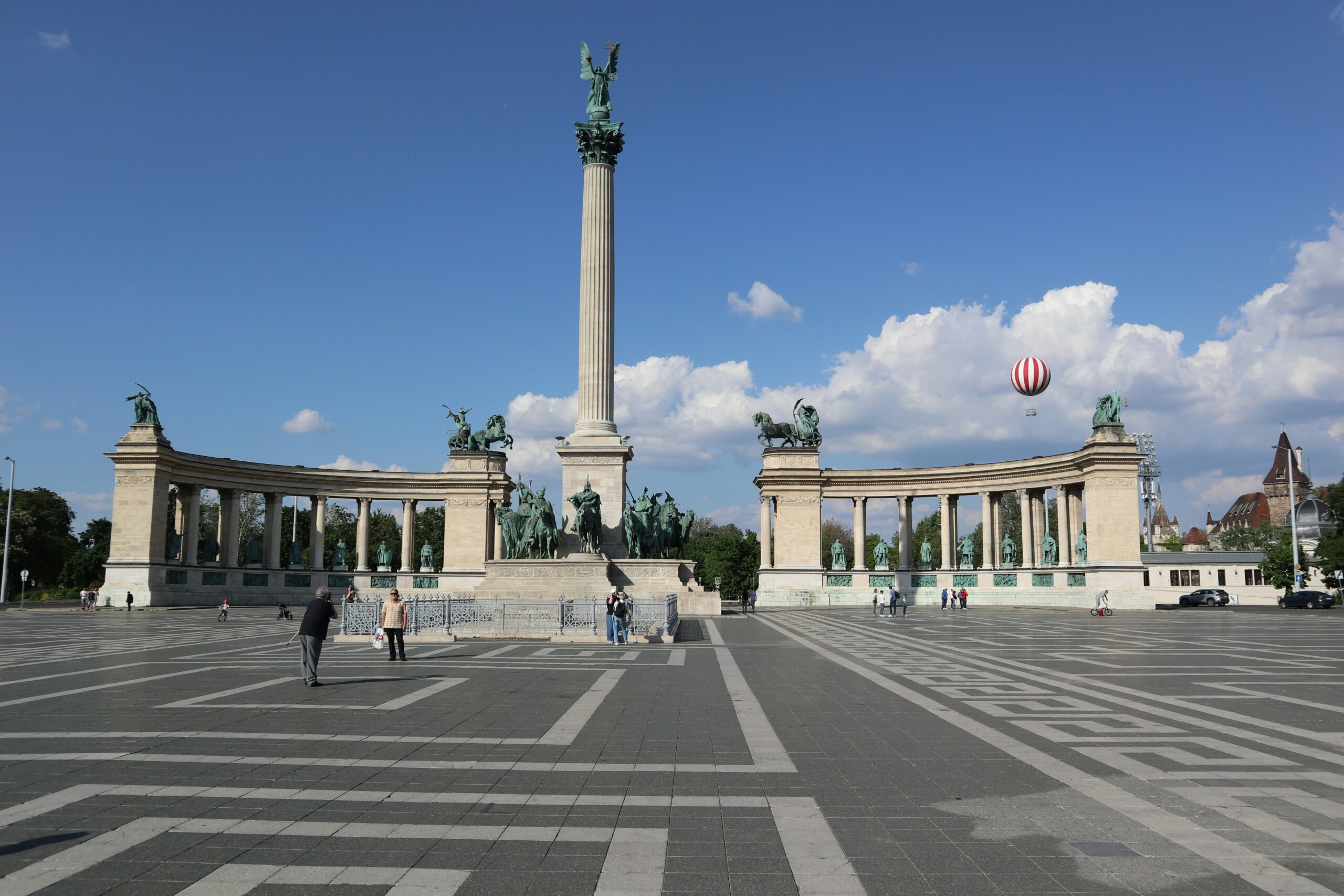
It is still, of course, an open question whether April 12 will result in successful democratization, but it seems certain that the election was a deliberately revolutionary act directed at a democratizing regime change. Just two days before the elections, hundreds of thousands of young people participated the so-called “Regime Dismantling Grand Concert” at Heroes’ Square where among popular musicians two whistleblowers – a young captain of the Army and a detective from the National Office of Investigations who went public with serious accusations against the regime’s misuses of the armed forces and secret service – were welcomed by the masses with unstoppable chants of “Heroes! Heroes!” On election night, the Orbán-aligned broadcasters predicted the massive victory of Orbán’s party and seemed shocked by the sudden twist of events. Meanwhile, the future prime minister, Péter Magyar, called for the resignation of some of the highest-ranking public officials (all close allies of Viktor Orbán) from the head of state to the chief public prosecutor, the president of the Constitutional Court, and several others, making it clear that he sees them as the puppets of the fallen regime. Magyar also promised the restoration of democracy, the rule of law, and a pro-EU change in policies. Some days later, new polls suggest that the public support for Fidesz is in free fall (the gap between Orbán’s and Magyar’s parties is ca. 40 percentage points) and that people explain the need for regime change with the corruption of Orbán’s party. All in all, the election does not seem to be an isolated event but a part of a tectonic change in Hungarian politics with a clear mandate for undoing Orbán’s electoral autocracy.
Magyar’s party was established only two years ago, but the strategy it followed – an electoral path toward defeating Orbán’s regime – was forged by the experiences of the sixteen years preceding April 12. The regime started with a weak and deeply divided opposition, and Orbán tried to cement his power by creating an electoral system that doomed the small opposition parties to failure as long as they could not consolidate their support. In 2014, opposition parties with limited cooperation gathered more votes, but still Orbán won a supermajority. In 2018, a further weakened opposition with slightly more cooperation was defeated again by Orbán’s party. In 2021, the opposition introduced primaries to create a united list of candidates, and even for a brief moment, their public support surpassed the popularity of Orbán’s party but their awkward campaign, faced with a regime campaigning with unlimited resources, led the opposition at the brink of complete destruction in 2022. The situation seemed almost hopeless at that moment; in retrospect, however, it is obvious that people learned their lesson. When Magyar entered Hungarian politics in 2024, his movement spread like wildfire, and all remaining opposition parties had to understand sooner or later that they could not withstand history for long. Most opposition parties declared in advance that they would not run for office; the remaining stubborn ones suffered a humiliating loss of votes. People clearly learned that in a rigged system like this, the only sure way to get rid of the regime is to act strategically: they massively abandoned their former parties and voted for the only chance for change.
Is this a new model for fighting autocracy by electoral revolutions? Not necessarily. But it is a paradigm case for perfectly using the instruments originally designed to maintain an electoral autocratic regime against the regime without having to resort to violence. Thus, the April 12 electoral revolution should carry important lessons and also provide hope and encouragement.