


The title’s statement, using a metaphor- Gray is Beautiful is the only element that isn’t surprising to me: my teacher and dear friend, Jeff Goldfarb often thinks and encourages readers to think with metaphors, and with quotes from other authors who help him think, such as in his book The Politics of Small Things. In the introduction to Gray is Beautiful, Goldfarb shares that this was a title of a talk by Adam Michnik at the New School for Social Research, and that continuing Michnik’s commitment and sensibility toward a duty to thinking about solutions to attacks on democracy comes in shades of gray, rather than in flashing colors. The solutions he offers, too, are in shades of gray.
The subtitle: Confronting the Retreat of Democracy from the Radical Center poses the potent tensions that are crucial for attempting to solve the problems at hand. Confronting is a conscious action directed to acknowledge a negative state of affairs. Retreat is a reaction to an assault. Goldfarb’s title tells us – democracy, like a person under assault, often retreats. This confrontation is performed from a certain place, not by an army or a nation. That certain place is a space–the Radical Center. Goldfarb and the people who create this space create it consciously. It is radical to confront the retreat of democracy from a center that is plural and open, as Jeff Isaac observed in his tribute to this important book.
Indeed, asserting that gray is beautiful offers a tool against absolutism- of regimes, institutions and individuals that attack democracy with lies, and of black-and-white solutions. Quoting Michnik, democracy is a diligent search for compromise. Goldfarb’s is a commitment to centering differences and dialogue. A commitment to finding specific local solutions to problems. In the following, I will comment on the ways reading Gray is Beautiful helps me, and will help my students, in understanding and addressing attacks on democracies.
Goldfarb models this space of understanding in various examples. Addressing Israel-Palestine, Goldfarb claims: “The position “between” is the truly radical one that recognizes the fundamental facts on the ground and seeks a just resolution of the conflict, with strong commitment to conflicting interests” (pp. 5-6). Goldfarb shows the reader where to seek and harness these tools: “It is within the creative culture of the radical center in architecture, art, poetry, literature, theater, music, and film that we can see zones of interaction and deliberation opening up”. Thanks to Jeff’s methods in teaching this conviction to me and to my fellow graduate students at the New School for Social Research, this sentence, in its earlier iterations, opened my own research to considering art as a space for engaging with plural democracy at times of social change. The commitment to art, as a space of political creativity within the somewhat autonomous domain of culture is an aesthetic, theoretical one: “The gray is beautiful aesthetic and the radical commitment to the center are predicated upon a sociological understanding that runs counter to the prevailing approaches to social and political inquiry” (p. 10). Goldfarb’s approach “…starts with an understanding of limitation and sees this understanding as an intriguing opening for democracy, for public deliberation, for individual and collective agency” (p. 11).
Considering the Israeli-Palestinian conflict with Hannah Arendt, and how Arab-Jewish dialogue is not a dream but a necessity, Goldfarb reflects on a failed project of considering the politics of small things in Israel and Palestine, which didn’t take off because of the difficulty of collaboration between Palestinian and Israeli colleagues and his own cultural and language limitations. I admire Goldfarb’s daring humility both in trying to constitute such a project, and in admitting that even if it could not change the intractable conflict, it could create a free space of exploration. Yet, it didn’t, and he laments this in 2026.
Reading Goldfarb’s book has not only been encouraging and energizing but also created the necessary intellectual and emotional space of appreciating complexity and uncertainty as a starting point for engagement and change. Jeff Goldfarb gave many of the chapters as talks. I was an organizer or a co-host of two of them and had the privilege of discussing the ideas he developed and eloquently shares in a close examination of his own past work, as they took form and changed. In the chapters, Goldfarb models the openness and dialogue that he encouraged, and which indeed took place in those rooms and clandestine public spaces I hope will continue between us and students, colleagues and publics that Jeff has engaged in for half a century.
Goldfarb writes about his sociological inquiry and teaching with humor. In the third chapter, he confesses that he turned from a radical leftist to a radical centrist committed to free, public life. He offers a Cartesian corrective which ends the second chapter: I am uncertain; therefore, I act, and appreciate others who act wisely”. Jeff Goldfarb has been attuned to the world wide web as a domain for politics from its early days, publishing the blog Deliberately Considered, which developed into Public Seminar and Democracy Seminar. I have been invited to contribute to these exciting discussion platforms. In doing so for years from the position of precarity I felt that I have an intellectual community. As Jeff demonstrates, uncertainty developed shared concerns and projects based on ideas, not identity or status.
In the chapter Art After Auschwitz Goldfarb claims that “Art is radically Centrist.” He writes: “It is exactly in significant works of art that difficult pasts are addressed with nuance and creativity, moving their audience beyond clichéd reflection, enriching public memory, and opening more promising relationships between the past and the future” (76).
“Enriching collective memory, Toni Morrison’s Beloved, Pawel Pawlikowski’s Ida, and Maya Lin’s Vietnam Veterans Memorial, bring people together, making it possible to speak and act in each other’s presence in their differences, as they deal with dilemmas of social life” (p. 76).
In chapter 6: Teaching in Afghanistan: Acting as If We Live in a Free Society, Goldfarb reports from his experience of leading seminars with students from the American University in Afghanistan before, and mostly after the Taliban takeover in 2022. He writes that the students and colleagues “recognize a need for public deliberation among those who oppose the Taliban order. But they are fully aware of the difficulties in initiating and sustaining such deliberation”. Goldfarb returns to the relative autonomous domain of culture, and of cultural freedom “as a basis for significant alternative action in repressive contexts” (p. 102). With these teachings, he observes the difficulties and necessity of striking a public discussion based on mutual respect, and how it was achieved in the Afghan context, under a repressive regime. Goldfarb offered a lecture about alternative action in repressive conditions using the Thomas Theorem according to which “If men define situations as real, they are real in their consequences” (p. 105). He tells his listeners and readers that the theorem was developed in the book, The Child in America co-authored with Dorothy Swaine, Thomas’s wife. In this way, Jeff enlarges the space of action by addressing sexism which limited for women for centuries- in the US and in Afghanistan.
The concluding chapters take stock with the questions of collaboration and non-collaboration in repressive regimes, which illuminate the condition in the US under Trump and Trumpism. Goldfarb lists the myriad explanations of democracy’s retreat: “the bankruptcy of neo-liberalism, the economic and social consequences of globalization, the rising fear of the other, xenophobia and racism, the confusion about and suspicion of cultural and technological change, and various forms of resentment and conspiracy theories, all intensified by the new media order as it has operated in the shadow of the pandemic” (p. 159). Yet, he offers the readers hope against hopelessness. As Siobhan Kattago shows in her review, Goldfarb recognizes the enemy of democracy in the neo-totalitarianism which attacks free public life. In the examples Goldfarb gives for reconstituting those spaces, he writes: “Sustaining free, mutually respectful speech is both a crucial means, and an important end” (p .179). The book provides international examples for actions which reconstituted hope. Let us use it as a guidebook and memoir that will help us understand, discuss and document shades of gray as we struggle for democracy.
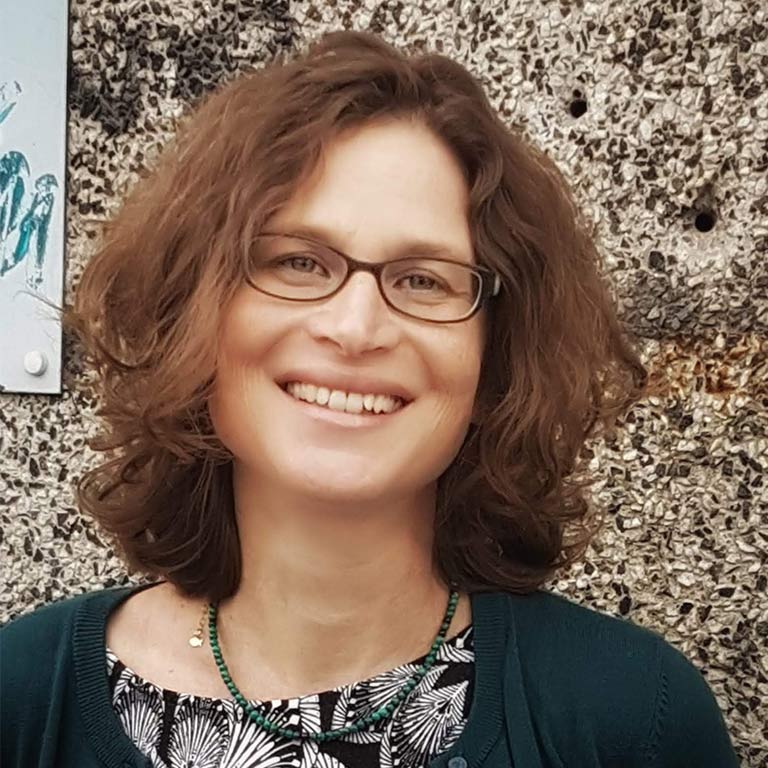
Irit Dekel is Assistant Professor of Germanic Studies and Jewish Studies at Indiana University. Her research and teaching focus on memory cultures; media and the public sphere; race, ethnicity and belonging; migration and museums. She is the author of Mediation at the Holocaust Memorial in Berlin (Springer 2013) and Witnessing Positions: Jews, Memories and Minorities in Contemporary Germany (forthcoming with University of Indiana in 2027).