



The invasion of Ukraine, Europe’s rearmament debates, and the uncertain future of American security guarantees have made the adequacy of Europe’s institutions hard to ignore. The deeper question — what kind of union Europe needs, and can build — has returned with new urgency.
The essays gathered here ask what the American experience — more particularly the debates between federalists and anti-federalists — can teach about the costs, limits, and possibilities of building a union, and whether those lessons travel to Europe at all. Some contributors find in the American case, and in the debates that produced it, real resources for thinking about Europe’s fiscal and political capacities. Others are more skeptical: they question whether the analogy holds, or argue that what the American path required — in scale, coercion, and lost accountability — is exactly what Europe should avoid repeating. Still others ask whether the founding was ever as coherent as its admirers have assumed.
We didn’t ask contributors to agree, and they don’t. That disagreement mirrors, in miniature, the unresolved argument at the heart of the European project itself.

A Democratic EU Is Possible: Building A Federal Polity
Jared Sonnicksen (RWTH Aachen University) argues that supranational democratization of the EU remains possible. He reflects on the parallels between the federal democracy of the United States, which includes a popularly elected president, and the EU-Polity, which still lacks a commensurate democratic anchorage at EU-level.

American Lessons on Constitutional Authority in the European Union? Limits of constitutional law and the promise of constitutional politics in the European Union
Shree Agnihotri (University of Nottingham) argues that Europe should look less to the constitutional ingenuity of Philadelphia than the continuing political work required to sustain the constitutional order.

Hamilton’s Unfinished Case for Europe: A Geopolitical Argument
Boris Vormann (Bard College Berlin) argues that since the 1950s, Europe has built half of Alexander Hamilton’s vision of a strong, central, federal government concerned with both market integration and collective security guarantees, while leaving the other half, security, conspicuously and dangerously unfinished. Today, the external pressure that might finally force Europe to complete that vision is arriving not gradually but all at once.

Federalism or fish sticks? The structure and substance of European Foreign and Security Policy
Berit Ebert (Bard College Berlin) argues that while the founding narratives of the USA and the EU differ, a European foundational norm, in the sense of what Hans Kelsen called a basic norm (Grundnorm), has developed in parallel to national ones since 1951. The debate about a more coherent Common Foreign and Security Policy (CFSP) displays that it is time to decide which norm, national or European-federal, truly has priority.

The Bonds of Union: Debt and Europe’s Federal Question
Nicholas Fellows argues that while issuing common debts can strengthen the EU’s political integration, the US experience demonstrates that creating durable fiscal union in large scale democracies requires corresponding mechanisms of solidarity, investment, and democratic legitimacy.
![Photo: Publius (pseudonym) [Alexander Hamilton, John Jay, James Madison]., Public domain, via Wikimedia Commons.](https://democracyseminar.org/files/2026/08/The_Federalist_1st_ed_1788_vol_I_title_page_-_02-123x200.jpg)
What Union Costs: Federalist and Anti-Federalist Lessons for Europe
Christian Lammert (Freie Universität Berlin) contends that the Federalist–Anti-Federalist debate over union, power, and liberty offers Europe a valuable lens for confronting its own dilemma: how to build enough common capacity to act decisively without sacrificing democratic accountability and local self-government.

Finding Europe’s “We the People” Moment
Dale Mineshima-Lowe (Parami University) argues that the United States’ founding experiences can shed light on where the EU needs to focus its energies to strengthen its political union.

Size and Democracy: Why the Federalist Papers Are Not a Blueprint for a More Democratic Europe
Dirk Jörke (TU Darmstadt) argues that since The (U.S.) Constitution led to a loss of democracy, primarily because of the size of the new political space, Federalist’s ideas should not be regarded as a blueprint for democratizing the European Union.
An Upper House: Anti-democratic Privilege or Savior of Republicanism?
Michael Weinman (Indiana University) Michael Weinman examines contemporary critiques of the United States Senate as an antidemocratic vestige of the slaveholding character of the Early American Republic and imagines how Publius would reply, based on the arguments of Federalist Nos. 62-63.
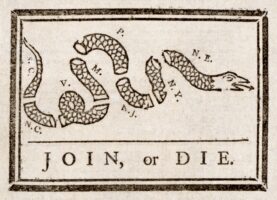
Imperial by Design: Is the US Model Worth Emulating?
Eva Marlene Hausteiner (University of Erlangen-Nürnberg) argues that far from serving as a historical safeguard against empire, U.S. federalism has been entangled with colonial and imperial practices since the nation’s founding—a finding that should give pause to those who assume federal structures, including a prospective European framework, are inherently immune to imperial drift.
