

Europe in the postliberal World: Geopolitics, Economics, and Values
The role and position of Europe in the world have been the subject of debates in International Relations (IR) and beyond in recent years. However, so far these debates primarily have taken place in different epistemic communities. Discussions in IR (e.g. Adler-Nissen and Zaraykol 2021, Bialasewicz 2016, Flockhardt 2016 and 2020), Political and Social Theory (e.g. Latour 2018, Tsing 2021), History (e.g. Berenson 2021) or Postcolonial Studies (e.g. Chakrabarty 2008, Said 2008 [1978])) thus have been poorly received in European Studies (but see Kundnani 2023). So there is a task ahead for EU Studies.
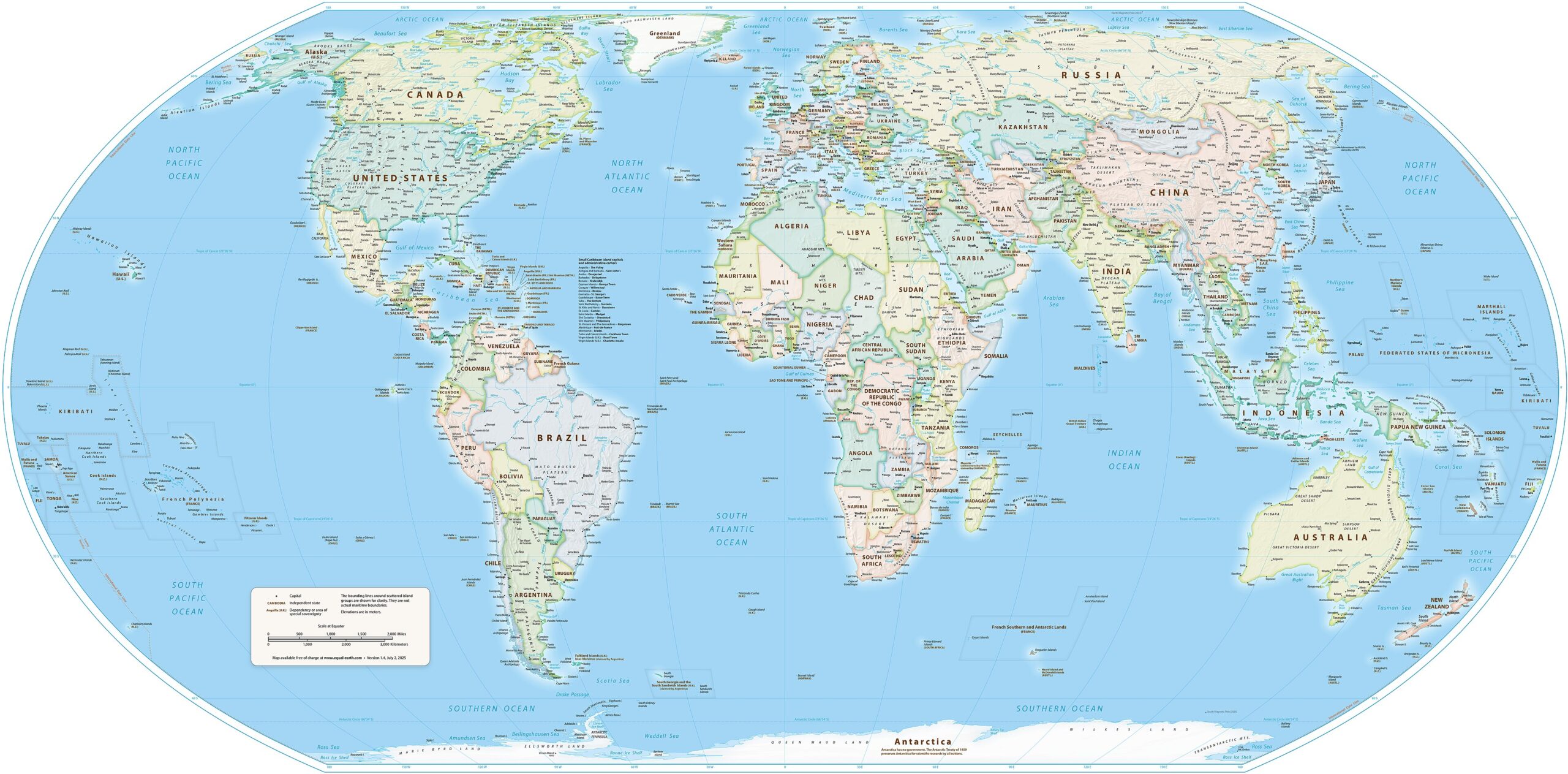
Discussing “Europe in the World” regards both the EU and its Member States. Importantly, Europe is not identical with the European Union. Furthermore, not all European states are EU Member States (Wiesner and Schmidt-Gleim Eds. 2014). A number of recent developments underline that Europe is part of a changing world order and that the role of Europe and the European Union in the world are challenged: Russia’s war of aggression against Ukraine, as well as the Israel-Hamas conflict, followed the global financial crisis and the COVID-19 pandemic (Wiesner and Knodt Eds. 2024). Regarding (geo)political and economic questions, the position and economic prosperity of former centres and peripheries in the world economy are changing dynamically, and Europe loses its formerly dominant position. Former European cooperation partners in Africa, Asia, and South America claim an independent role in the world and the developing multipolar order or even multi-order world – a development that has been discussed as challenging of the Liberal International Order (Flockhardt 2016, 2020; Adler-Nissen and Zaraykol 2021). As the international discussion on climate change underlines, the question of the planet’s future is a major issue and challenge in this changing global order (e.g. Chandler, Müller and Rothe Eds. 2021, Ghosh 2022, Latour 2018).
What is at stake in all this is the role, interrelation, and changing position of European states and the European Union in the changing world order with regard to (geo)political, economic, and ecological issues – but also with regard to the related ideas, concepts, and values (the ideational dimension). The ideational dimensions of Europe’s role in the world is even a key issue in the changing world order, since the changes and the related political and academic debates and struggles directly relate to European Value orientations in the sense of the liberal economic model, a European approach to climate change, the conflict between democracy and autocracy, and, all in all, the concepts, ideas, and values that Europe stands for, such as liberal democracy, freedom, and the rule of law. Concretely, the values named in article 2 TEU – “human dignity, freedom, democracy, equality, the rule of law and respect for human rights, including the rights of persons belonging to minorities […] which pluralism, non-discrimination, tolerance, justice, solidarity and equality between women and men” – are often implicitly or explicitly contested.
But European modernity – and hence also these European values – has a Janus-faced character (Wiesner 2024b), as it stands for the development of representative democracy and human rights on the one hand (Wiesner 2019), while on the other hand, there is not only Europe’s colonial legacy, but also a rationalist modern ideal of capitalism, governing, relating on expertise and bureaucracy, and the consequences it had for exploitation and the destruction of the planet (Chandler and Chipato 2023, Ghosh 2022, McEwan2021). Navigating this evolving reality entails grappling with new political dynamics across political, economic, and ideological spheres.
As the EU and its Member States grapple with repositioning themselves within a changing global order, the economic, (geo)political and ecological conflict lines thus become intertwined with broader ideological conflicts. It becomes evident that the EU’s values are contested in the changing world order in manifold respects and that (geo)political, economic, and ecological challenges and conflicts are decisively linked to ideational conflicts relating to values, ideas and concepts (Wiesner 2024a, Knodt and Wiesner 2024). The struggle around a postliberal world order is largely an ideational one.
It is therefore decisive, in the debates on the postliberal world order, to focus on the ideational dimensions of Europe’s role in the world, i.e., the ideas, concepts, and values Europe, the EU, and its member states are linked to (see in detail Wiesner 2019). This approach represents a genuinely new perspective within the field of both the EU and its Member States and the related debates on the changing world order. The ideas, concepts and values Europe stands for need to be analysed in relation to geopolitical, economic, and ecological issues, and tackling policy fields and themes such as democracy and legitimacy, the EU facing the new wars, the EU’s democratic values and the rule of law, the world’s ecological situation, and controversies between the Northern and Southern States in the world (see the contributions in Wiesner and Knodt Eds. 2024).
Representation and perception of the EU and its values in the changing world order (Chaban and Holland Eds. 2019) are changing. Europe’s perception in the world is no longer a rather positively connoted one as normative power (Manners 2002) and heartland of representative democracy and Human Rights, but oftentimes a rather negatively connoted one as the heartland of colonialism and planetary destruction. And indeed, as said above, European modernity has a Janus-faced character (Wiesner 2024b), as it stands for the development of representative democracy and human rights as well as capitalism, exploitation of nature, and a colonial legacy (Chandler and Chipato 2023, Ghosh 2022, McEwan2021).
The EU, moreover, faces the challenges of admitting new members, with countries like Ukraine, Georgia, and Moldova aspiring to EU membership while simultaneously contending with rule-of-law issues within Member States such as Poland, Hungary, Romania, and Bulgaria. In that context and importantly, authoritarian tendencies and the rise of right-wing populist parties within several EU states, visible democratic backsliding and deconsolidation, and a growing lack of trust in representative democracy highlight that there are internal struggles for liberal democratic values within the EU and the conflict between democracy and autocracy is not solely an external challenge (Knodt and Wiesner 2024, Wiesner 2024a).
These ideational dimensions of Europe´s role in the world are directly related to and intertwined with the world’s geopolitical and economic conflicts. The war against Ukraine encompasses not just a geopolitical and military conflict but also the ideological struggle between liberal democracy and autocracy. It serves as a catalyst, accentuating the challenges faced by the EU in defending its values, both externally in the international arena and internally amidst democratic strains within its Member States (Wiesner 2024a). China is not only an autocracy but also a competitor to the US in both respects. Both China and the US, as well as the EU, and Russia, struggle to win over the support of or cooperation with former developing powers. Official cooperation structures such as BRICS underline that geopolitical, economic, and ideological power is shifting away from the West in general and Europe in particular (Knodt and Wiesner 2024, Wiesner 2024a).
All the questions just mentioned relate to ecological problems, climate change, and the question of the planet’s future (see the Contributions in Chandler, Müller and Rothe Eds. 2021). Europe’s role in this is ambivalent. On the one hand, European states were the drivers of industrialisation and hence caused climate change from early on, on the other hand, the EU today is a key promoter of limiting climate change and establishing green technologies (Wiesner 2024b). The question after the planetary future also links again to the ideational dimension of what Europe is and stands for: The role of humankind in triggering climate change, but also the limits of European traditions of thinking based on the enlightenment need a critical reflection (Chandler and Chipato 2023, Ghosh 2022, Latour 2018, Wiesner 2024b).
All this underscores the complexity of Europe’s role in navigating global shifts while safeguarding its core values, highlighting the need for in-depth research and exchange with students, citizens, researchers, and the public. As stated above, so far these debates largely have taken place in different epistemic communities. Debates in IR, Social and Political Theory, History, or Postcolonial Studies have been poorly received in European Studies. Moreover, European and Non-European perspectives in these debates differ, i.e., scholars from non-European contexts discuss the challenges of the new world order differently than EU-based scholars.
The Jean Monnet CoE WorldEU “Europe in the World” at Fulda University of Applied Sciences tackles these questions and debates. It is the overall goal of the centre to link the debates in the epistemic communities of IR, Social and Political Theory, History, Postcolonial Studies and EU Studies, and the debates among European and Non-European scholars.
