


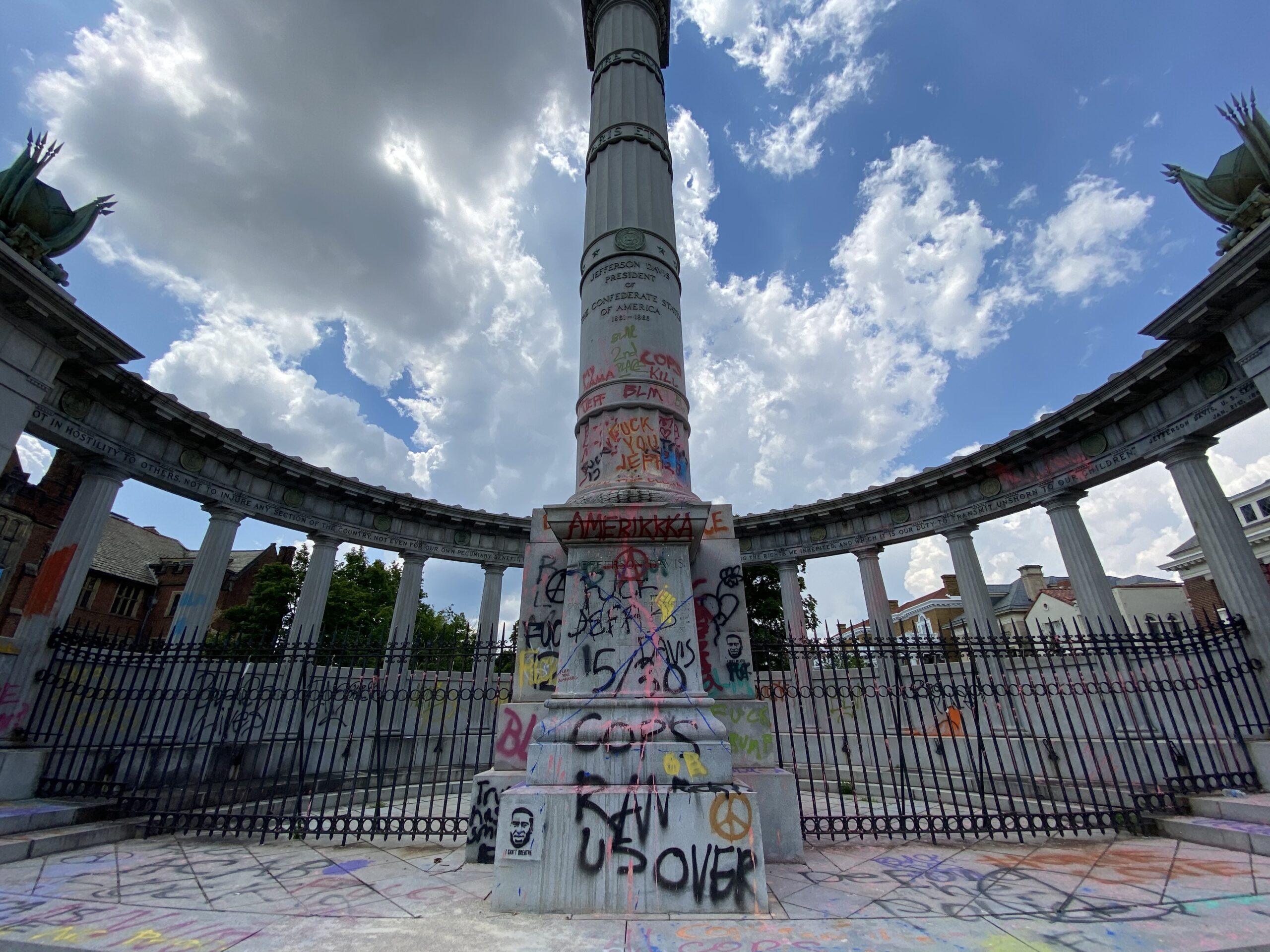
William Scheuerman’s Property Disobedience as Political Protest addresses some of the most interesting and timely questions that remain largely unanswered in the vast and still burgeoning literature on the politics of protest. He asks: Under what conditions and to what extent, political protests that involve property damage can be justifiable? What standards should we expect from those pursuing them to meet, under imperfect yet identifiably democratic conditions? Are there nonviolent as well as violent varieties of property disobedience? According to Scheuerman, the current literature is unable to address these important questions since it accepts at face value “the orthodox view that damage to property is intrinsically violent” (p.32). Taking on this blindspot directly and by grounding non-violence vis-à-vis persons on the democratic principle of equal respect, Scheuerman develops a nuanced theoretical position that can both capture the crucial empirical distinctions among different types of politically motivated property damage and offer normative criteria to judge them. The analysis, however, loses its characteristic sharpness when Scheuereman refuses to stop at the questions of justifiability to address the issue of “effectiveness” and when he broadens the scope of “disobedience” to cover even those acts whose (il)legality is a matter of political contestation.
Scheuerman’s book offers an excellent corrective to one of the major problems of the existing literature on (un)civil disobedience and political rioting, namely the tendency to lump together different kinds of protest to make generalizable claims about their justifiability. Scheuerman addresses this shortcoming in two ways: first, he argues that it is theoretically necessary to pay attention to the diversity of different forms of protest while addressing evaluative questions. Second, he makes the case that it is possible to capture empirical specificity without giving up on the capacity to make generalizable normative claims. To develop these points, Scheuerman undertakes three compelling moves.
First, he offers a conceptual intervention and identifies the object of his analysis as “property disobedience”, defined as “a range of politically motivated acts that illegally damage or harm property, negatively impacting public or private owners by violating their rights” (p. 18). Scheureman’s emphasis on illegality here is important as it raises the question of justification. Second, he engages in a sophisticated philosophical exercise to challenge the view that property damage is intrinsically violent (Chapter 2). Building on Martin Luther King’s refusal to place politically motivated property damage “on the same normative plane as violence against persons” (p. 43) he argues for a version of political nonviolence that would rest on a principled “core of nonviolence towards persons” (p. 46).
To develop this conception, Scheuerman moves away from King’s Christian perspective and offers a principled political grounding to non-violence vis-à-vis persons. He writes “A principled—though unavoidably imperfect—commitment to nonviolence follows from the aspiration to live together with others in a shared political community in which everyone deserves basic respect. The problem with violence is that it prospectively means treating others as mere objects” (p. 44). Unlike human beings, property does not, as such, deserve our equal respect; we have no categorical reason to favor nonviolence in relation to it. In light of this, Scheuerman proposes to limit the use of the term “violence” only to those acts that harm or injure persons, disabling or removing them from the shared political enterprise. For Scheuerman, even if property damage can sometimes have a negative impact on human persons’ physical and psychological integrity, it is not conceptually useful to clump all these acts together. Thus, he argues that rather than “a priori declaring different forms of politically motivated property damage all violent, we need to do the difficult…work of examining its various types and considering its possible ties or connections to violence” (p. 39) vis-à-vis persons.
With this goal in mind, and this is his third, and to my mind most compelling, theoretical move, Scheuereman introduces a typology that consists of 3 ideal types (in the Weberian sense of the term) of property disobedience. These are:
- symbolic property disobedience: legally unauthorized damage to or destruction of property directed against a target that has been selected primarily because of its symbolic or expressive value;
- disruptive property disobedience: acts that aim to disrupt some practice viewed as unjust or illegitimate, with the targeted property interpreted as essential to the wrongdoing in question; and
- politically oriented property seizures, with three subsets: property repossession, where activists reclaim a territory that had been illegally taken from them; repurposing and/or reusage, as in the case of squatters; and consumption or use (typically, of consumer goods), as in the cases of looting.
These are not airtight categories and in real life they frequently blend into one another (for instance, one can suggest that Ruby Montoya and Jessica Recznicek’s sabotage of the Dakota Pipeline can be considered an example of both symbolic and disruptive property disobedience) but, as ideal types, they offer a useful analytical tool that can help commentators address important normative and political questions regarding the political legitimacy and moral justifiability of particular instances of property disobedience.
Questions of justifiability and legitimacy are central to Scheureman’s project as “an evaluative endeavor focused chiefly on the question of how democracy—and the core ideal of political equality—potentially permits some but not all politically based property harms” (p. 3). Scheuereman takes on the difficult theoretical task of providing “a measuring rod for property disobedience that tells when it is unacceptable even when undertaken by those with whom we sympathize” (p. 22). I believe that book’s grounding of non-violence vis-à-vis persons on the democratic principle of equal respect along with the typology that it offers to make sense of the messy empirical cases do provide a helpful way of making such normative and political distinctions. And yet, at times, the analysis seems to lose its characteristic sharpness. I suggest that there are two reasons for this. The first reason is tied to Scheureman’s attempt to move beyond questions of justifiability to address the issue of “effectiveness.”
The question of effectiveness plays a particularly significant role in Chapter 3 where Scheuereman discusses symbolic disobedience and asks when symbolic property damage attains the quality of a successful political performance. The goal posts of success, however, continue to shift as the chapter proceeds. To be efficacious a symbolic protest has to “garner attention” and “thematize injustices,” Scheuerman writes (p. 56). But garnering attention does not appear to be enough, such protests must also rejuvenate public debate. And even when they rejuvenate the public debate, they may fail to generate a “desirable political response” (p.56). And, of course, what counts as a desirable political response is a matter of discussion itself. Does the removal of a confederate statute in response to the BLM protests count as success? Or the fact that most of the confederate statutes still remain in their place point to a failure on the part of the protestors? The shifting of the goal posts can partially be explained by the fact that in loosely organized protests such as the BLM protests, the activists themselves do not list a clear set of goals. Accordingly, their success or failure are judged by goals imposed on the protests by observers who are making the judgement; some of those goals (as the analyst or theorist sees them) may not align with protestors’ own understanding of their actions. More significantly, questions of failure and success, while they are raised with good intentions, end up preventing us from appreciating the significance of what the protestors do when they engage in these protests which re-shape not only themselves individually but also help creating networks of solidarity that can be reactivated later on; for example, many neighborhood networks first formed during the 2020 protests in Minneapolis were reactivated to protect neighborhoods from violent ICE incursions in January 2026.
My second concern relates to the overly broadened use of the term “disobedience.” Property disobedients are “disobedients,” Scheuerman writes, because they “break the law, but they often do so in ways that distinguish them from ordinary criminals” (p.10). And yet, as he himself argues some activists who engage in politically motivated property damage insist that their actions are in fact legal. Activists, such as those who participate in Brazil’s Landless Workers Movement, take advantage of “a legal gray zone” (p. 121) and insist that their occupation of the land is legal. In a similar vein, Native claims for property reclamation often “rely on legal and constitutional appeals, positing that those who violate treaty and property rights are, in fact, the real lawbreakers” (p. 114). Scheuerman glosses over these claims to legality. Following Rawls in A Theory of Justice, he argues that in most cases disobedients acknowledge that their acts violate the law; “even those property disobedients who insist on the legality of their endeavors” Scheureman continues, “may refuse ‘to desist should the courts eventually disagree with them’” (p. 19). For Rawls, and for Scheuerman, this willingness to go against the court’s decision renders these activists disobedients/lawbreakers. Insofar as they reduce activists’ interpretive claims over the meaning of the law and their insistence on the legality of their actions to, in Rawls’ words, “merely a complicating matter,” however, such accounts prevent us from taking activists’ political claims seriously.
Consider the following: On April 19 2026, hundreds of activists attempted to rescue 2000 beagles from Rigland Farms in Wisconsin in an open rescue. As “open rescuers,” these activists did not hide their identities. They announced their intentions in advance and attempted to enter the facilities without permission of the owners to remove animals. And while the authorities deemed their actions illegal, and proceeded to arrest many of them, the activists insisted that what they were doing, even though it involved property damage, was legal—just as it’s legal in many jurisdictions to break a window to save a dog trapped in a hot car. Calling these activists “disobedients,” I suggest, prevents us from seeing how they are turning law into a site of contestation. Surely, civil disobedients too appeal to the law. But if civil disobedience remains suspended in the gray zone between legality and legitimacy, these activists operate in a legal gray zone as they reject the idea that in democratic society, interpretation of the law, as Frederick Douglass argued in his famous 1852 speech What to a slave is the Fourth of July?, “is not a question for the people.” This is a different political move than breaking a law openly to draw attention to an injustice. Rather it is an attempt to use the existing law by offering an alternative interpretation so as to argue that it is the authorities, or the companies that are protected by authorities, who break the law.
Scheuerman starts the “Violence and Property” chapter with a crucial statement. He writes “Not surprisingly, protestors who violate property rights frequently resist characterizing their efforts as violent, instead emphasizing their nonviolent bona fides. This chapter tries to take that claim seriously” (p. 28) And so he does and to great effect. I believe that it is time to take protestors seriously when they claim that their actions are legal. If there is anything that those who work on liberal democracies of the global North can learn from the democratic struggles in countries like Russia, Hungary, and Turkey, it is that popular protests in these contexts often revolve around a contestation over the meaning of what constitutes legal action. By insisting on the legality of their actions, protestors aim to demonstrate the unlawful nature of the regime’s rule so as to hold on to the few remnants of the rule of law. Such struggles over the meaning of existing law offer us an alternative form of protest to resist the ongoing authoritarianization in many self-proclaimed liberal democracies today, where authorities are bending the law and using it as an instrument of oppression while increasingly limiting the legal right to protest and intimidating the protestors by bringing criminal charges against them.